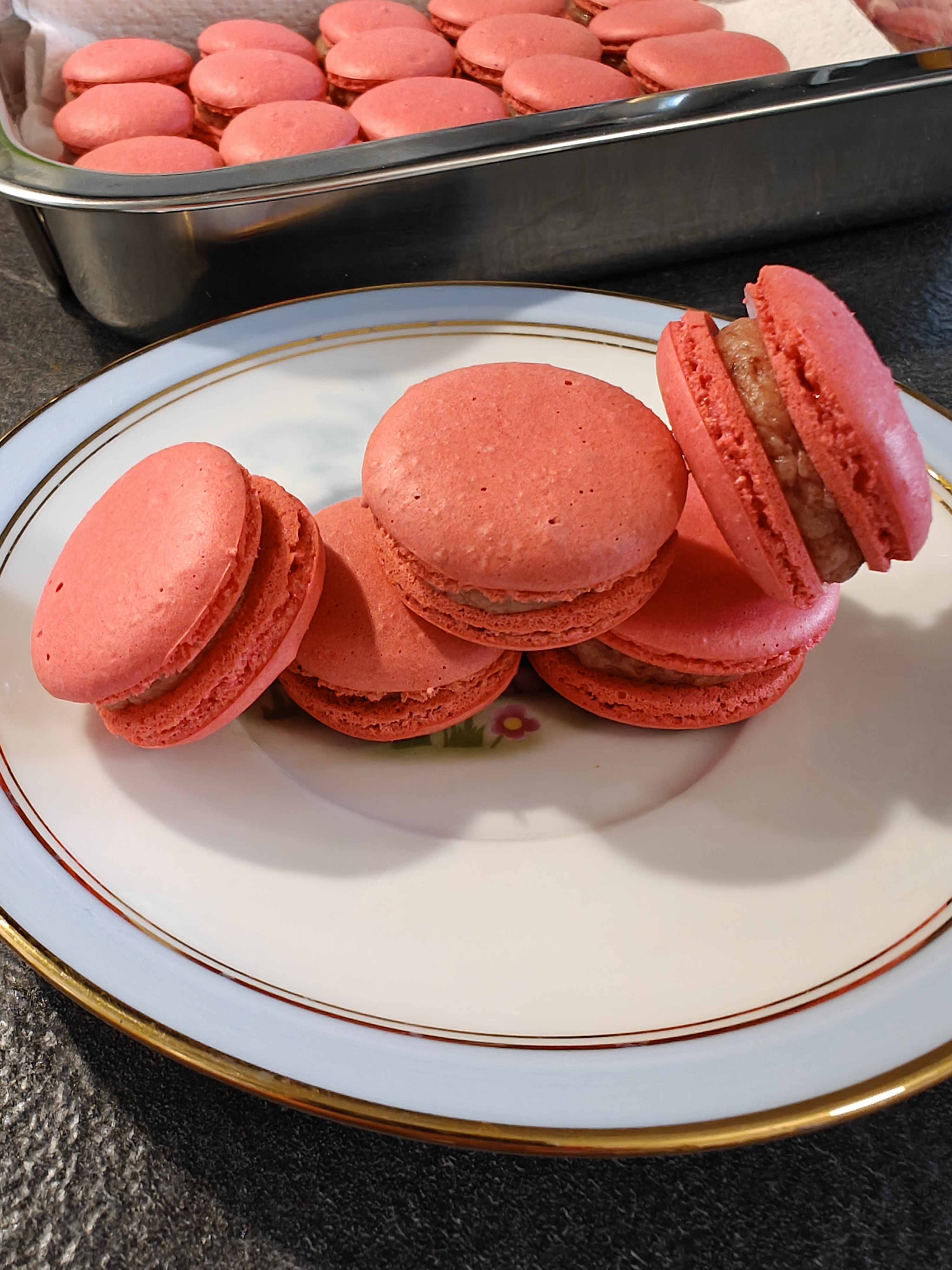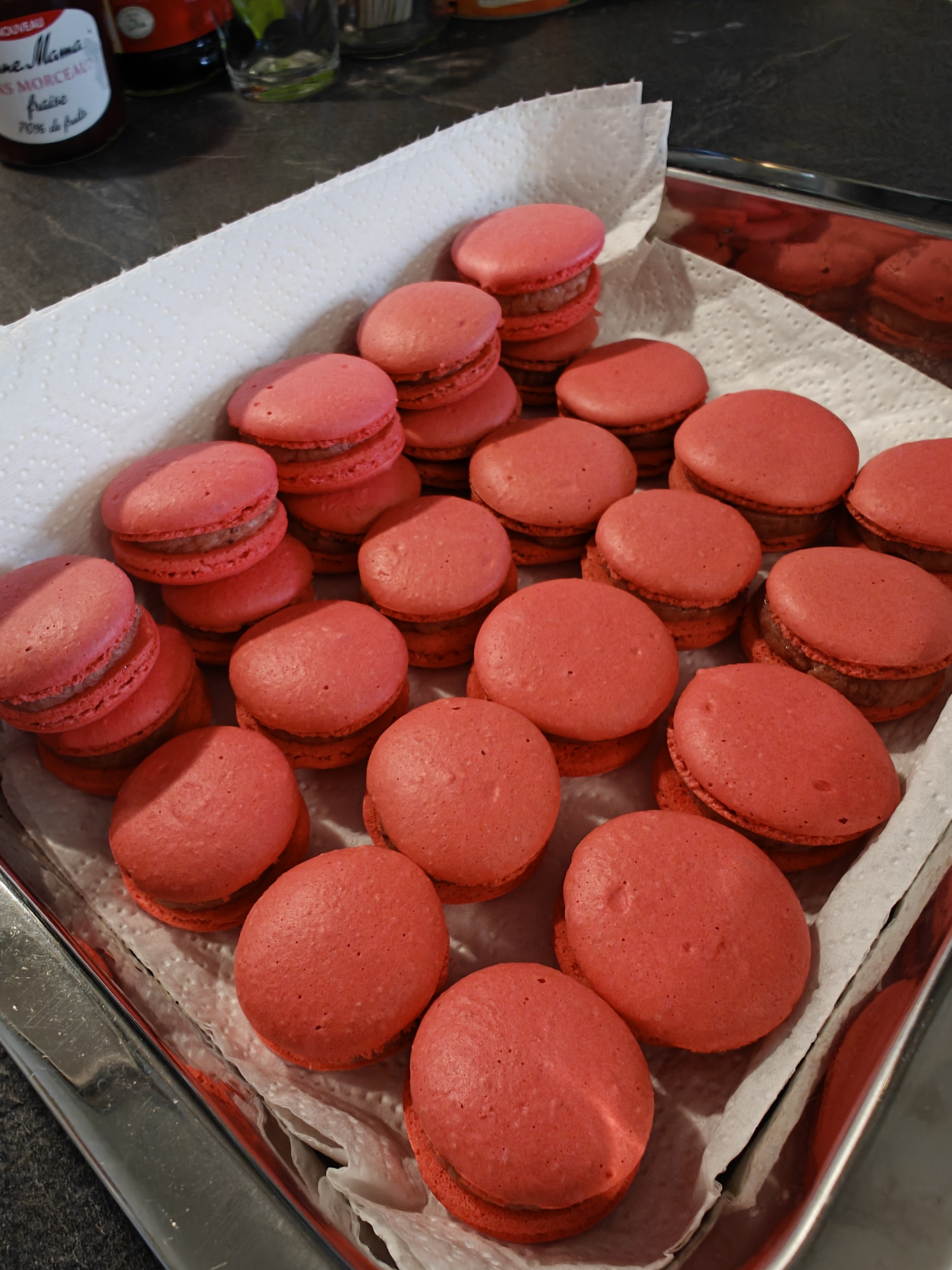
Strawberry Macarons
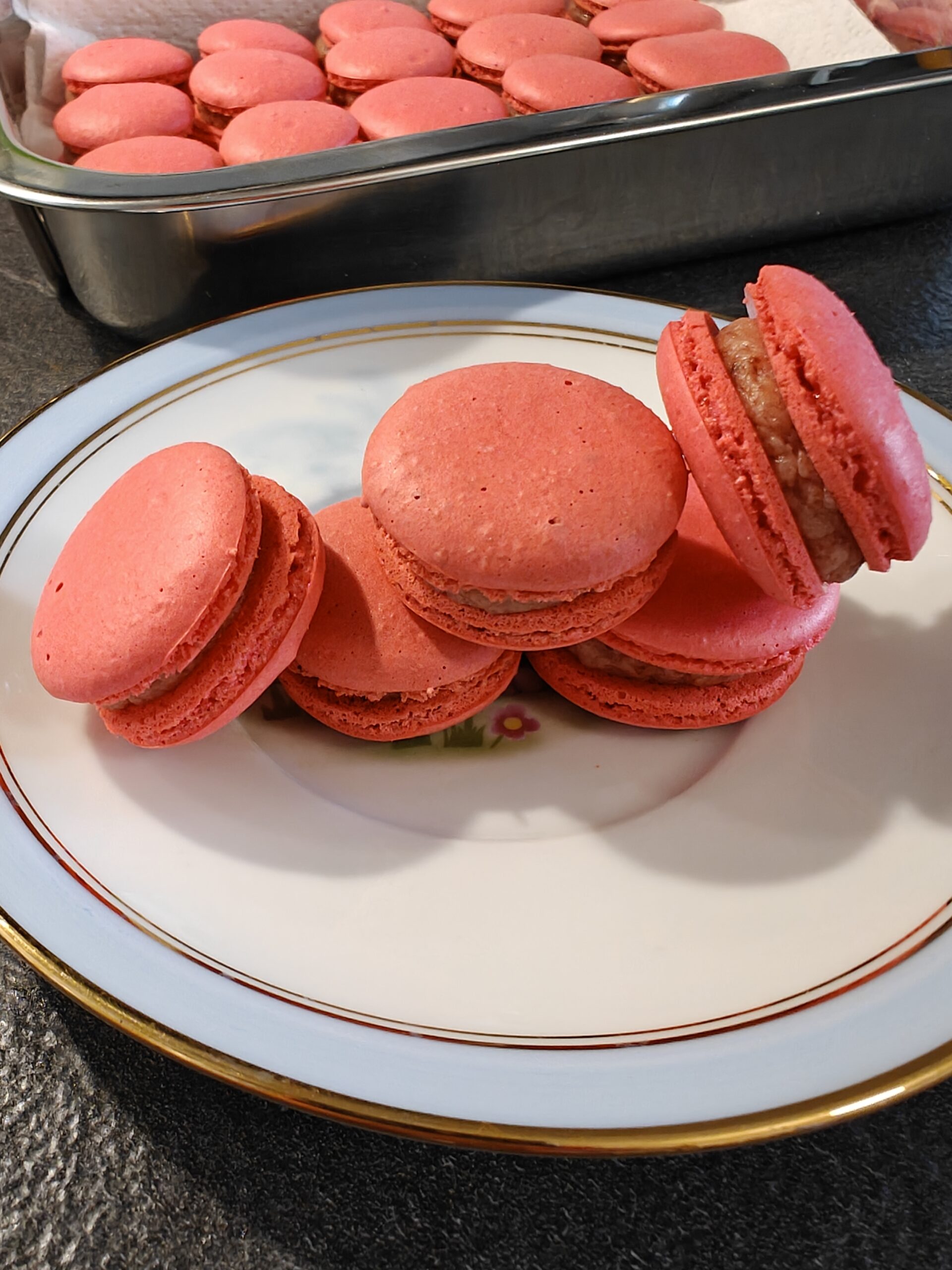
Macarons are small cakes made from ground almonds, icing sugar and egg whites, with a crisp shell and a soft, chewy centre. This version is filled with a strawberry jam buttercream, with the jam reduced first so the filling holds its shape.Macarons date back to the Middle Ages, but the modern two-shell version is generally credited to the Parisian house Ladurée in the early 20th century. They are loved for their many flavours (chocolate, raspberry, pistachio, lemon) and bright colours, and have become icons of French pastry.
TOTAL 90 MIN·SERVES 20·0 VIEWS
Ingredients
Shells
- 55 g almond flour
- 50 g icing sugar
- 45 g caster sugar
- 46 g egg whites
Filling
- 150 g strawberry jam
- 100 g softened butter
Method
Shells
- In a bowl, sift together 55 g almond flour and 50 g icing sugar.
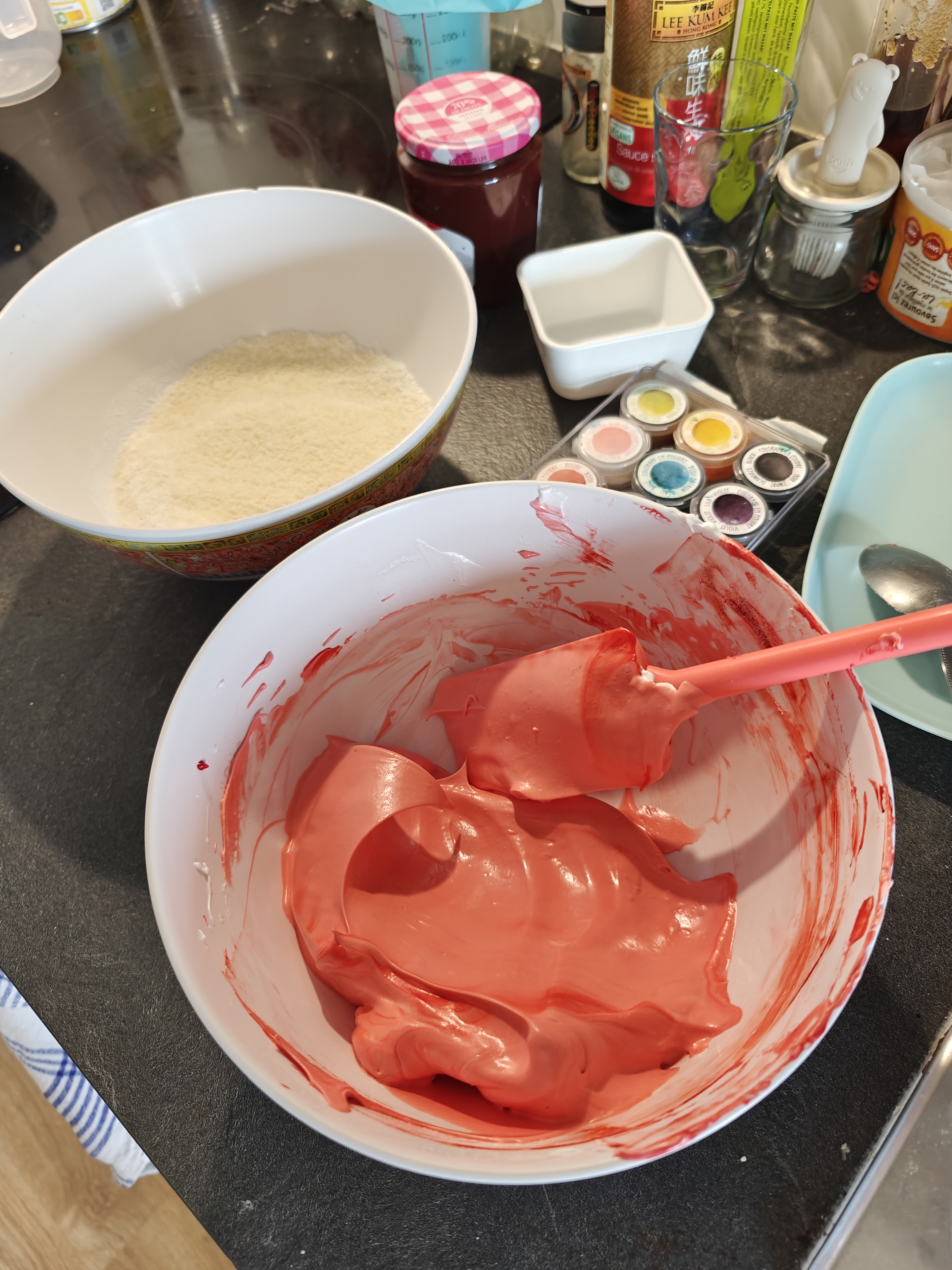
- In another bowl, whisk the egg whites while adding the caster sugar in 3 additions (45 g). Aim for an almost-meringue, without whipping to the maximum.You want a soft “bird’s beak” peak, but the mixture should stay fairly runny so that each piped shell fills its mould properly.
- Add the dry ingredients to the egg whites.
- Fold with a spatula to do the macaronnage. The batter should be smooth and fall in a ribbon.Personal tip: with the spatula, press the batter against the sides of the bowl while turning the bowl. Gather the batter and repeat.A successful macaronnage gives a nice “foot” around the shell during baking.
- Transfer the batter to a piping bag fitted with a plain nozzle.
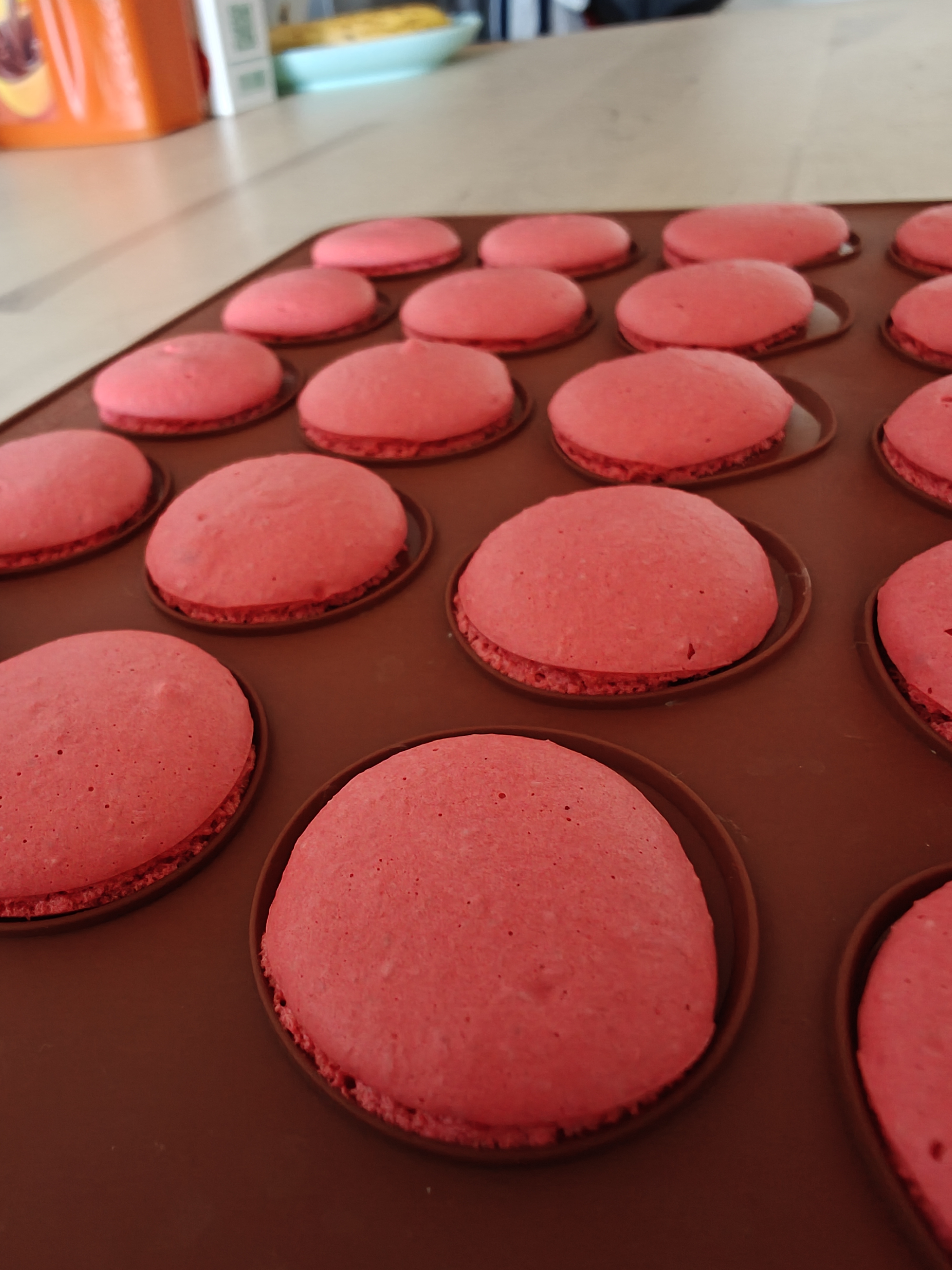
- 1 - I recommend a silicone mat with small round moulds, it makes the job much easier.2 - Otherwise, place a sheet of baking paper on a large, rigid support (e.g. a chopping board or baking tray).Pipe 2 cm rounds. No bigger: the batter spreads on its own and the shell may end up too large.Hold the piping bag vertically, at 90°, to get neat rounds.
- Once everything is piped, pick up the tray and tap it gently against the table.This pops any air bubbles on the surface of the shells and spreads them to about 3.5 cm in diameter, or fills the mould if the batter doesn’t reach the edges.
- Let the shells dry for 1 hour. The tops should no longer be sticky to the touch. A fan at a reasonable distance speeds things up.A skin must form on top of the shell: it forces the steam to escape from the bottom during baking, which creates the foot.
- Bake at 150 °C for 15 min, conventional heat (no fan). Let cool before removing the shells: they should come off easily.Baking depends on your oven, so test a few macarons before a full batch. Start at 140 °C for 15 min.
Filling
- Reduce the jam. Heat it in a saucepan over medium heat, stirring, for 5 to 8 min until reduced to about 100 g (it should thickly coat a spoon). This is the key step: the water in the jam makes the buttercream split and softens the shells.
- Blend or sieve the jam if it contains fruit pieces, so it doesn’t clog the piping bag.
- Cool completely to room temperature. If the jam is still warm, the butter will melt.
- Cream the butter. Beat it with a mixer for 3 to 4 min until pale and creamy.
- Add the jam one spoonful at a time, beating after each addition. If the buttercream splits (looks curdled), keep beating or warm the bowl for 5 seconds with a hair dryer.
- Chill for 20 to 30 min to firm up, then pipe with a plain nozzle.
- Assemble and leave to mature in the fridge for 24 hours.
Notes
If your shells crack during baking, there are two possible causes:
- the oven temperature is too high;
- there is too much egg white in the mix.